Custom software
The system you can’t buy off the shelf, built around your process rather than someone else’s.
Datapointe designs, builds and supports the systems businesses depend on — and stays long enough to prove they work.

Your goals, your users, your constraints — before anyone estimates anything.
Prototype and test first. Production code is the expensive place to learn.
Agile delivery you can see into, sprint by sprint.
We don’t disappear at launch. Most of our work is second phase.
End-to-end technology partnership, from the first sketch to the system running at scale.
The system you can’t buy off the shelf, built around your process rather than someone else’s.
We prototype and test with real users before a line of production code is written.
Find where work actually stalls and remove it — often before any software is built.
Azure and AWS migration, CI/CD and infrastructure your own team can operate.
Pipelines, reporting and applied AI that answer a question somebody actually asked.
Risk assessment, architecture review and compliance built in, not bolted on afterwards.

Most of our work is second phase — the part where a system meets real users, real volumes and the things nobody predicted. That is where projects are won or quietly lost.

Full case studies on request — we respect client NDAs, so what follows is illustrative.

Financial services
A lending platform’s regulatory reporting was assembled by hand each month from four systems. New requirements shortened the window, and the existing process could not be compressed any further without breaking.
We mapped the manual process, automated the collection and validation steps, and built an exception queue so analysts reviewed only what genuinely needed judgement.
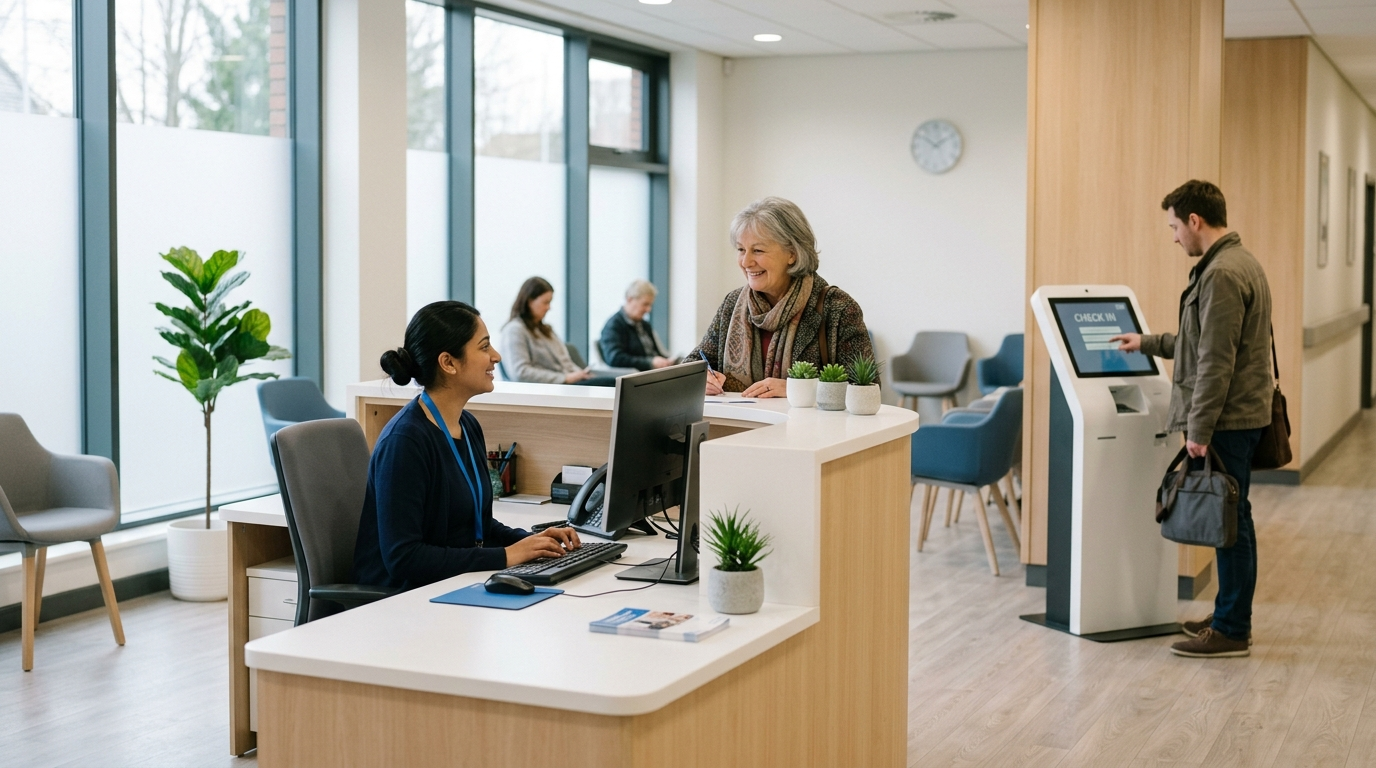
Healthcare
Front-desk staff across several sites were registering patients through a system designed for central administrators. Every registration took longer than it should, and queues formed at the busiest hours.
We spent time at the desks before designing anything, prototyped a shorter intake flow, and tested it with the staff who would use it every day.

Logistics
Dispatch had no live view of vehicles. Coordinators tracked drivers by phone, delivery windows were missed, and nobody could say with confidence where anything was.
We built a live tracking view over existing telematics data, with alerting on delays rather than a wall of green dots demanding constant attention.
A note on these: the three studies above are illustrative — representative of the shape of work we do, not accounts of named engagements. Real references are available under NDA during procurement.
They didn’t just build what we asked for — they questioned the brief until it was the right brief.
Operations Director, logistics client — illustrative
Communication was constant and specific. We always knew exactly where the build stood.
Product Lead, financial services client — illustrative
Datapointe stayed on after launch to help us through the next phase, not just the handover.
Founder, healthcare startup — illustrative
Illustrative feedback, representative of the comments we receive. Named references available on request.
Get in touch and we will arrange an initial conversation. We will talk through your goals, your timeline and your budget, and come back with a plan and an honest view of what is achievable.
We research your business, your users and your sector before design work begins, and we work alongside your people throughout. Every sprint produces something you can see and react to.
Yes. Our published work is illustrative because we respect client NDAs, but we can share directly relevant examples and arrange references during procurement.
It varies with scope. Discovery is usually two to four weeks; a first useful release is often eight to twelve weeks after that. We give an estimated timeline once we understand the work.
Whatever you need. Some clients take full handover with documentation and training; others keep us on for a support arrangement or the next phase.
Tell us where you’re headed — we’ll help you build the roadmap to get there.